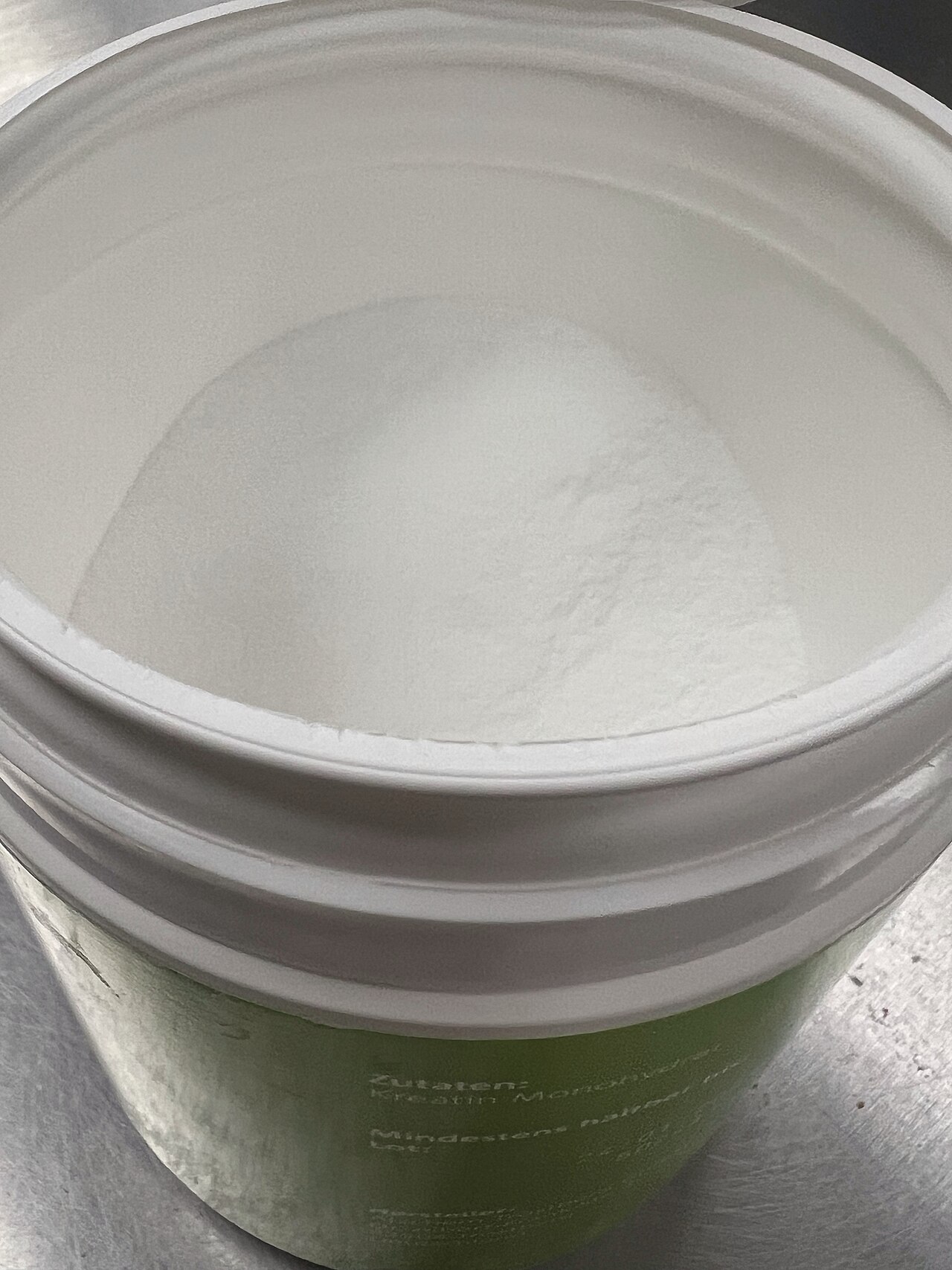
Creatine loading sounds mandatory.
The standard protocol is familiar: take a relatively large amount for several days, then drop to a smaller maintenance intake.
That protocol works.
But the word loading can make people think it is the only way creatine works.
It is not.
The clearest difference between loading and not loading is speed.
Short answer
What is creatine loading?
A common loading protocol uses approximately 20 grams per day for 5–7 days, usually divided into several smaller servings.
After that, studies often use a smaller maintenance amount.
NIH summarizes this pattern in its exercise-performance evidence review.
The logic is straightforward.
A relatively high short-term intake increases muscle creatine stores quickly.
That can be useful in research because investigators do not have to wait several weeks before testing the effect of elevated stores.
What happens if you skip loading?
Muscle creatine can still increase.
One of the most useful experiments was published in the Journal of Applied Physiology in 1996.
Researchers studied 31 men using different creatine-intake strategies.
Approximately 20 g/day for six days increased muscle total creatine by about 20%.
But another strategy also worked.
About 3 g/day for 28 days produced a similar, more gradual increase in muscle total creatine.
That finding is the basis for the simplest answer to the loading question:
loading gets there faster; lower daily intake can get there more slowly.
So is loading necessary?
No.
Not if “necessary” means the only way to increase muscle creatine stores.
The classic comparison directly demonstrated that a lower daily intake could reach a similar increase given more time.
This also explains why creatine recommendations can sound contradictory.
One source may describe a loading protocol.
Another may describe a smaller daily amount without loading.
Both can be reasonable descriptions of research strategies.
They are solving different timing problems.
Why would someone choose to load?
The clearest reason is speed.
If an athlete wants muscle creatine stores to increase rapidly before a near-term training or competition period, loading can shorten the time required.
That does not mean loading creates a permanently larger endpoint.
It means elevated stores are reached sooner.
For someone with no deadline, that advantage may matter much less.
Why would someone skip loading?
A lower daily strategy is simpler.
It can also avoid the inconvenience of taking multiple larger servings for several days.
Some users report gastrointestinal discomfort when consuming large amounts of creatine at once.
A loading phase can also produce a relatively rapid change in body weight, largely associated with water.
Someone who does not care how quickly muscle creatine increases may therefore prefer the slower approach.
Loading and long-term effectiveness are different questions
This distinction is easy to miss.
Imagine two people.
One increases muscle creatine quickly during the first week.
The other reaches a similar elevation over several weeks.
If both eventually achieve elevated stores and continue an appropriate maintenance strategy, the initial difference in speed becomes less important.
That is why a loading protocol should not automatically be described as a superior long-term form of creatine use.
It is an acceleration strategy.
Does loading build muscle faster?
This question is harder than the muscle-creatine question.
Increasing stores faster is not identical to proving that every downstream training outcome improves faster by a clinically meaningful amount.
Creatine’s long-term effects depend on the interaction between supplementation and training.
A 2024 meta-analysis found greater lean-body-mass gains when creatine was added to resistance training than when resistance training was performed without creatine.
But that analysis does not turn the loading phase itself into the central reason for the long-term body-composition effect.
The distinction between:
raising muscle creatine quickly
and:
producing more muscle over months
should remain clear.
Is more than the loading protocol even better?
There is no good reason to turn loading into a contest for the largest number.
Muscle creatine storage is finite.
The objective is not to keep increasing the dose indefinitely.
Once stores are elevated, additional intake does not imply a proportionally larger performance benefit.
That is one reason Bextera’s creatine monohydrate dossier separates loading, maintenance and no-loading research protocols.
What about body weight during loading?
Short-term creatine use can increase body weight, particularly because creatine retention is associated with water.
A loading phase can make that change happen more quickly.
That does not mean the short-term weight gain is fat.
Bextera’s creatine weight-gain guide separates water, muscle and fat when interpreting scale changes.
The distinction matters particularly for athletes in sports where body mass or weight classes influence decision-making.
Does creatine have to be taken at a specific workout time?
Loading strategy and workout timing are separate questions.
A person can follow a loading protocol without proving that each serving must occur immediately before or after training.
Bextera’s review of the best time to take creatine examines that question separately.
This prevents two different ideas from being collapsed into one:
How quickly should muscle stores be increased?
and:
At what clock time should creatine be consumed?
The takeaway
Creatine loading works.
It is also optional.
A high-intake loading phase raises muscle creatine stores quickly, while lower daily intake can reach a similar endpoint more gradually.
That makes the choice mostly about how quickly elevated stores are wanted, not whether creatine can work at all without loading.
For most readers, the cleanest interpretation is:
Loading changes the timetable more than the destination.
Sources
References used in this article
-
Dietary Supplements for Exercise and Athletic Performance — Health Professional Fact Sheet
NIH Office of Dietary Supplements
-
Muscle creatine loading in men
Journal of Applied Physiology · PMID 8828669
-
The Effect of Creatine Supplementation on Resistance Training-Based Changes to Body Composition: A Systematic Review and Meta-analysis
Journal of Strength and Conditioning Research · PMID 39074168
Hero image: Awkwafaba · CC BY-SA 4.0