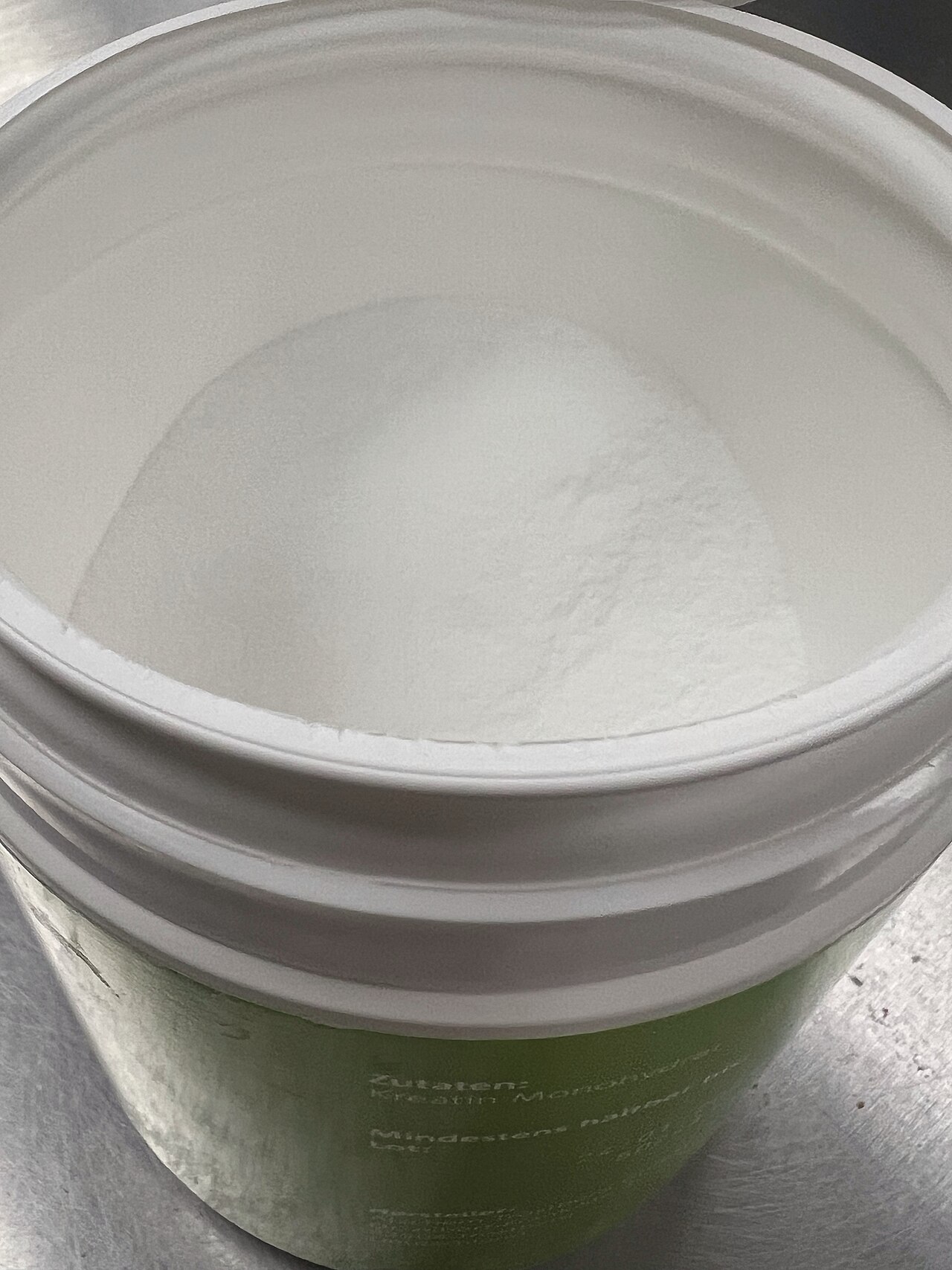
For years, the practical advice around creatine has been unusually simple: take it consistently and stop worrying about the clock.
A small study published in 2026 has made that answer slightly more interesting.
Researchers gave physically active men creatine before, during or after a resistance-training session and reported better strength performance in some tests when creatine was taken before exercise. That sounds like evidence for a pre-workout advantage.
It is also exactly the kind of result that needs context.
The study involved only 11 men, tested an acute dose rather than months of regular supplementation, and its authors described the findings as exploratory. Larger longer-term work has not established a meaningful pre-versus-post advantage.
So has the best time to take creatine actually changed?
Short answer
Creatine timing: the evidence at a glance
| Question | Evidence-supported answer |
|---|---|
| Is there a proven best time to take creatine? | Current evidence does not establish one clearly superior time. |
| Is pre-workout creatine better than post-workout? | Long-term research has not demonstrated a consistent advantage. |
| Did a 2026 study find a pre-workout benefit? | Yes, but it was an exploratory acute pilot involving only 11 physically active men. |
| What dose is commonly used after saturation? | Research commonly uses about 3–5 g/day. |
| Is a loading phase required? | No. It increases muscle creatine more quickly, but lower daily doses can also increase stores over time. |
| Which form has the strongest evidence? | Creatine monohydrate. |
What did the new 2026 creatine study actually find?
The new research is worth paying attention to, but not because it settles the debate.
In the randomized crossover pilot trial, 11 physically active men completed resistance-training sessions under five conditions. They consumed creatine monohydrate before exercise, during exercise or after exercise, along with placebo and no-supplement control conditions.
The dose was 0.1 grams per kilogram of body weight. In the pre-exercise condition, the full dose was consumed two hours before training.
Researchers measured performance during bench press and back squat work performed at 80% of one-repetition maximum.
The pre-workout creatine condition was associated with greater total strength performance than placebo and the no-supplement control in those tests.
That is interesting because creatine is normally thought about as a supplement that works through increasing muscle creatine stores over time rather than as something that suddenly behaves like caffeine when taken before a workout.
But there are three reasons not to turn this study into a new rule.
First, 11 participants is a very small sample.
Second, the researchers were investigating an acute dose without a loading phase, not comparing people who had already been taking creatine consistently for months.
Third, the authors themselves said the results need confirmation in larger studies.
So the study changes the question more than it changes the answer.
What happens when creatine timing is tested over several weeks?
Longer-term evidence is less dramatic.
A randomized, double-blind study published in Frontiers in Sports and Active Living followed 34 resistance-trained male and female collegiate athletes.
Participants received either:
- 5 g creatine within one hour before training;
- 5 g creatine within one hour after training; or
- placebo.
They followed the protocol for eight weeks alongside resistance training.
The result?
The researchers found that creatine timing did not provide an additional influence on the measured performance or body-composition outcomes.
That does not mean creatine itself is ineffective.
Creatine monohydrate has a substantial evidence base for improving performance during repeated high-intensity activity. The NIH Office of Dietary Supplements notes that creatine can increase strength, power and work performed during maximal muscular efforts.
The distinction is important:
Evidence for creatine is strong. Evidence for a precise creatine timing window is much weaker.
Why consistency probably matters more than the workout window
Creatine does not need to function as an immediate stimulant to be useful.
Its established role relates largely to increasing the availability of creatine and phosphocreatine in muscle, helping support rapid ATP regeneration during repeated high-intensity efforts.
That process depends on building and maintaining muscle creatine stores.
The NIH describes two commonly studied approaches.
A loading protocol typically uses around 20 g per day for five to seven days, divided into several doses, followed by approximately 3–5 g per day.
Another approach skips loading and uses approximately 3–6 g per day for several weeks.
The second method takes longer to raise stores but avoids making the loading phase a requirement.
That is why taking creatine every day at a routine that is easy to maintain can be more practical than obsessing over whether the scoop was consumed 20 minutes before or 15 minutes after a workout.
For a deeper look at the ingredient itself, see Bextera’s creatine monohydrate dossier.
So should you take creatine before or after your workout?
The honest answer is that either can fit an evidence-based routine.
The current long-term evidence does not justify telling everyone that creatine must be consumed pre-workout or must be taken immediately afterward.
The 2026 pilot makes the pre-workout question more interesting, particularly for researchers studying acute creatine use in people who are not already saturated.
But that is different from proving that someone who already uses creatine consistently will gain more muscle or strength simply by moving the dose from after training to before it.
A useful practical priority is therefore:
Dose and consistency first. Timing second.
There can still be practical reasons to attach the dose to training. Someone who already makes a post-workout shake every day may find it easier to put creatine there. Someone who has a fixed pre-workout routine may remember it more reliably before exercise.
The advantage in those cases is adherence, not necessarily a special metabolic window.
What about taking creatine on rest days?
Creatine research is often discussed around workouts because that is where performance outcomes are measured.
But once the objective is maintaining elevated muscle creatine stores, rest days are part of the same supplementation pattern.
A daily routine also removes an unnecessary decision:
Is today a creatine day?
That matters because supplements only have a chance to work as studied when the actual intake pattern resembles the protocol being discussed.
It also helps separate creatine from pre-workout products.
Creatine is not simply another stimulant. In fact, Bextera treats creatine and caffeine as separate questions because the reasons for timing them are different. See our guide to pre-workout caffeine for that distinction.
Does the form of creatine change the timing question?
Not based on convincing evidence.
Creatine monohydrate remains the reference form because it is the form used in much of the research.
The NIH notes that alternatives such as creatine ethyl ester and buffered forms have not been shown to outperform creatine monohydrate for increasing muscle creatine or improving relevant outcomes.
That is why a timing claim attached to a more expensive creatine form deserves scrutiny.
If a product says its formulation must be taken at a highly specific time because it absorbs dramatically better than ordinary monohydrate, the useful question is:
Where is the comparative human evidence?
Bextera covers that question separately in Creatine Monohydrate vs HCl.
What should you check on a creatine label?
Timing tends to get more attention than some of the more useful label questions.
For a straightforward creatine product, check:
- Form — is it creatine monohydrate?
- Creatine per serving — what amount does one actual serving provide?
- Serving size — does one scoop equal one serving?
- Additional ingredients — is it pure creatine or part of a multi-ingredient pre-workout?
- Testing information — does the manufacturer provide credible quality or third-party testing information?
Also remember that some early weight gain from creatine can reflect increased water retention rather than a sudden increase in body fat. We explain that distinction in Does Creatine Cause Weight Gain?.
Bottom line
The new 2026 study gives researchers a good reason to keep investigating creatine timing. It does not establish a new rule that everyone should move their creatine dose to the pre-workout window.
Longer-term randomized evidence has found similar outcomes when creatine is taken before versus after training.
For now, the strongest practical conclusion remains less exciting but more useful:
regular creatine monohydrate intake matters more than finding the perfect minute to take it.
If larger studies reproduce the acute pre-workout effect reported in 2026 — particularly in people who are already using creatine consistently — that conclusion may become more nuanced.
Until then, the timing debate is open. It just is not nearly as settled as supplement marketing can make it sound.
Sources
- NIH Office of Dietary Supplements — Dietary Supplements for Exercise and Athletic Performance
- Frontiers in Sports and Active Living — Effects of creatine monohydrate timing on resistance training adaptations and body composition
- Nutrients — Acute Creatine Ingestion Before Resistance Training Enhances Strength Performance More than Ingestion During or After Training
- Journal of the International Society of Sports Nutrition / review — Creatine O’Clock: Does Timing of Ingestion Really Influence Muscle Mass and Performance?