“High protein” sounds like an intuitive description.
On a regulated food label, nutrient-content language has definitions.
That does not make every high-protein product nutritionally identical. It gives consumers a better starting point for understanding what the marketing phrase is actually describing.
Start with the serving size
Before comparing the protein numbers on two foods, compare serving sizes.
A product containing 20 grams of protein in a very large serving and a product containing 20 grams in a much smaller serving do not have the same protein density.
Serving size also determines how the other figures on the Nutrition Facts panel should be interpreted.
If you routinely eat twice the labeled serving, you are consuming roughly twice the listed calories and nutrients.
FDA uses Daily Value thresholds
FDA’s general guidance uses % Daily Value as a quick way to interpret how much of a nutrient a serving provides.
As a broad rule:
- 5% DV or less is considered low;
- 20% DV or more is considered high.
The current Daily Value for protein is 50 grams for adults and children age four and older.
However, protein labeling has additional regulatory details, including circumstances in which protein %DV does not have to be displayed.
That is one reason simply looking for the biggest printed percentage is not always enough.
‘High’ is a defined claim
FDA rules generally allow “high,” “rich in” or “excellent source” nutrient-content claims when a food contains at least 20% of the Daily Value of the relevant nutrient per reference amount customarily consumed.
“Good source” generally describes 10% to 19% of the Daily Value.
These phrases therefore carry more specific meaning than loose marketing adjectives such as “protein packed.”
But high protein does not mean nutritionally superior
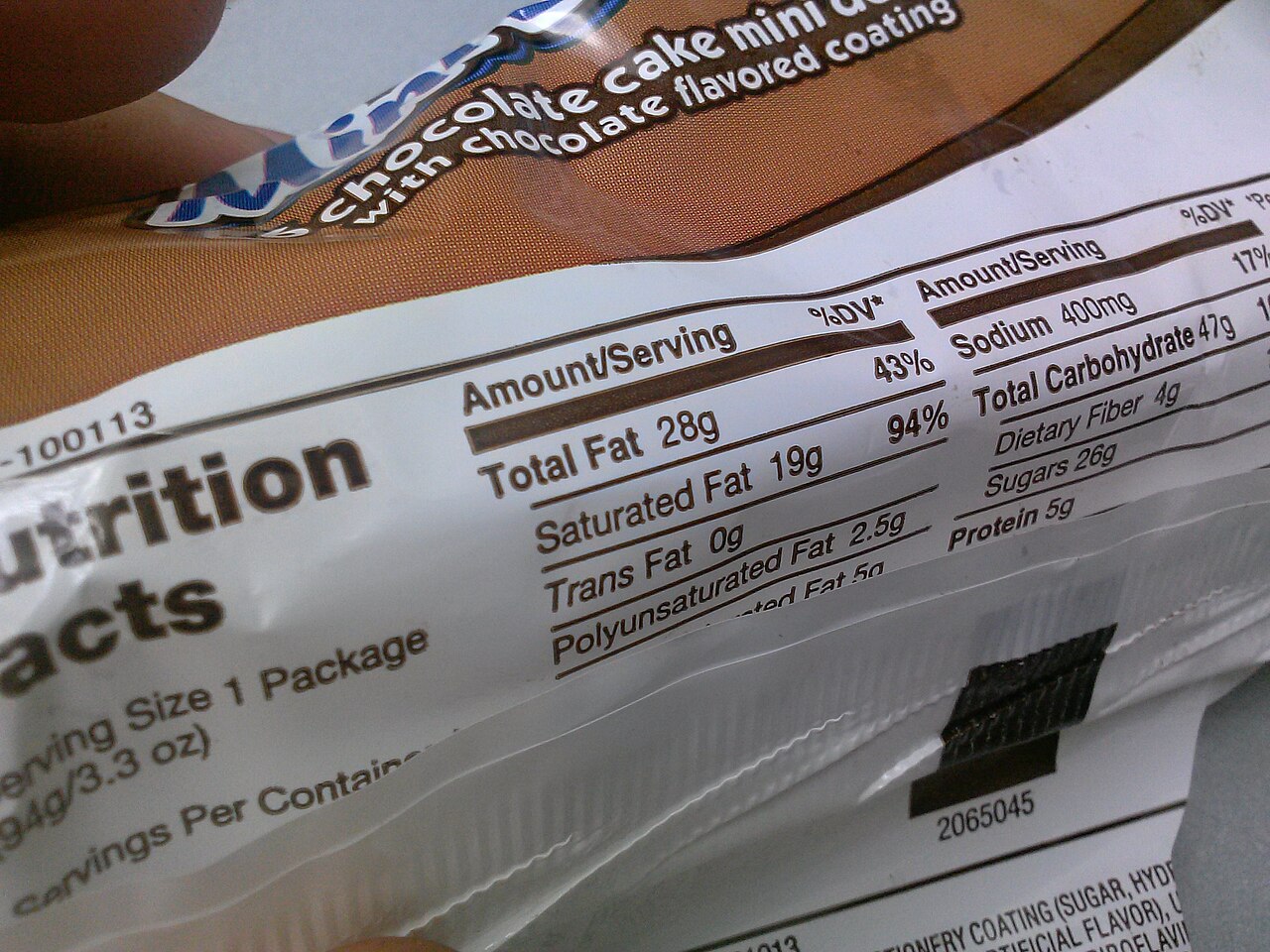
A product can contain a lot of protein and also contain:
- substantial sodium;
- added sugars;
- saturated fat;
- very little fiber;
- considerably more calories than a competing option.
Protein is one dimension of the product.
FDA specifically encourages consumers to use %DV to compare foods and to consider nutrients they may want more of as well as nutrients they may want less of.
That broader comparison is much more informative than selecting foods from the front of the package alone.
Protein density is a different metric
Suppose Food A provides:
- 20 g protein;
- 200 calories.
Food B provides:
- 20 g protein;
- 400 calories.
Both contain the same protein per serving.
But Food A delivers twice as much protein relative to its calorie content.
That can be a useful metric for somebody specifically trying to increase protein without increasing energy intake substantially.
It still does not tell us everything about food quality.
Cost can be normalized too
Price per package is often a poor comparison.
If two foods have different serving sizes and protein contents, a better commercial metric can be:
cost per 25 grams of protein
That allows products with different package sizes to be compared on the same protein basis.
Bextera uses the same logic for protein powders.
Read beyond the headline claim
For a useful food comparison, look at:
- serving size;
- protein per serving;
- calories per serving;
- % Daily Value where applicable;
- saturated fat;
- sodium;
- added sugars;
- dietary fiber;
- ingredient list;
- price per useful unit.
“High protein” can be useful information.
It just should not be the end of the analysis.
Sources
References used in this article
-
How to Understand and Use the Nutrition Facts Label
U.S. Food and Drug Administration
-
Daily Value on the Nutrition and Supplement Facts Labels
U.S. Food and Drug Administration
-
Dietary Supplement Labeling Guide: Claims
U.S. Food and Drug Administration
Hero image: B137 · CC0 1.0