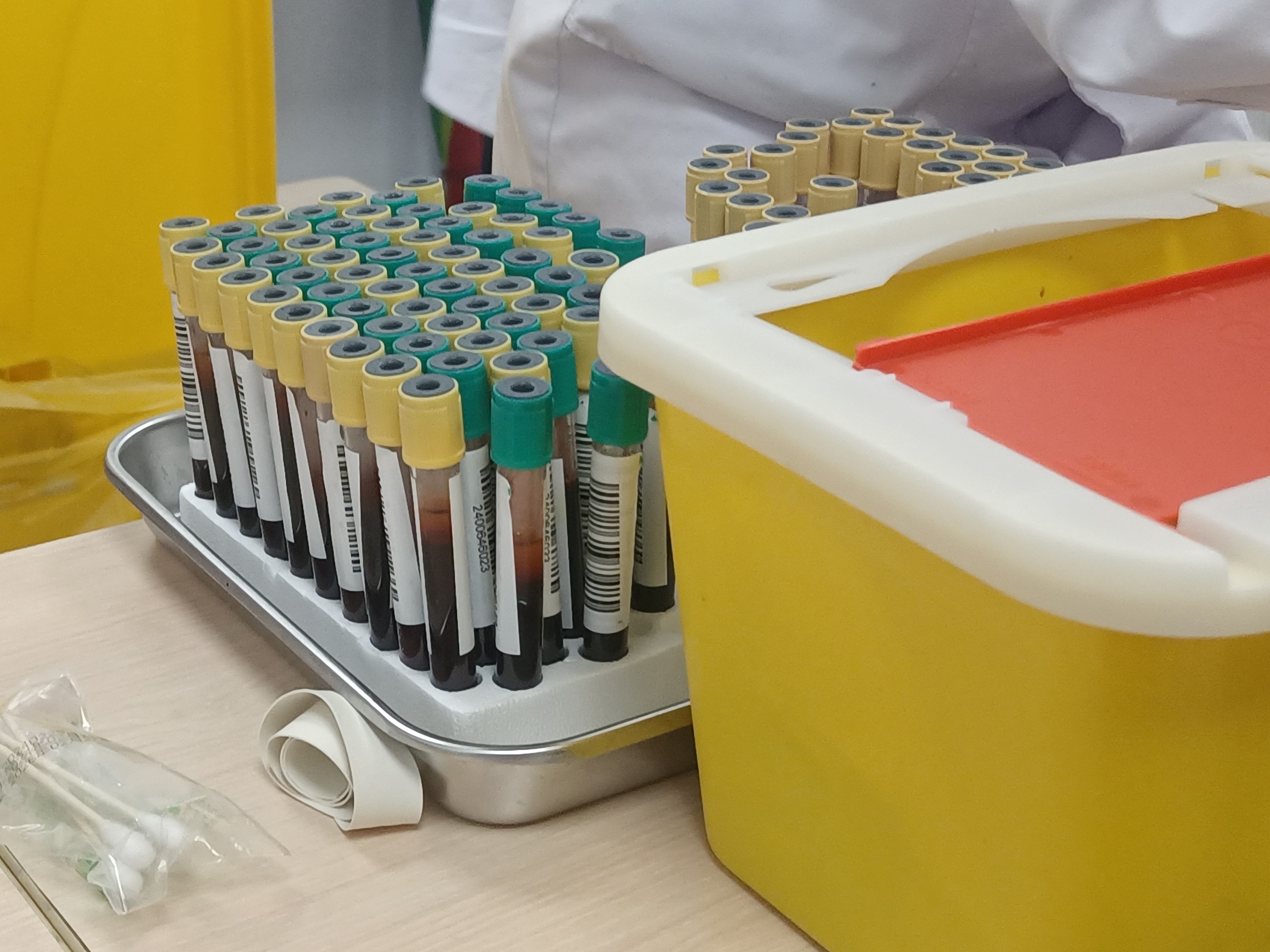
A vitamin D blood test looks unusually precise.
The result might say 18 ng/mL, 24 ng/mL or 31 ng/mL, often beside a laboratory reference range that makes the number appear clearly normal or clearly low.
The science is less binary.
Different professional groups have historically used different vitamin D cutoffs, and one of the most influential organizations has changed its position.
In 2011, the Endocrine Society classified serum 25-hydroxyvitamin D below 20 ng/mL as deficient, 21-29 ng/mL as insufficient and at least 30 ng/mL as sufficient.
Its 2024 guideline no longer endorses the old 30 ng/mL sufficiency threshold or the 20-29 ng/mL “insufficiency” category for generally healthy people.
That does not mean vitamin D deficiency disappeared.
It means a blood-test number needs more context than a single universal cutoff suggests.
Short answer
Vitamin D blood levels at a glance
| 25(OH)D level | nmol/L equivalent | NIH/FNB interpretation for generally healthy people |
|---|---|---|
| Below 12 ng/mL | Below 30 nmol/L | Associated with vitamin D deficiency |
| 12 to under 20 ng/mL | 30 to under 50 nmol/L | Generally considered inadequate |
| 20 ng/mL or more | 50 nmol/L or more | Generally considered adequate for most people |
| Above 50 ng/mL | Above 125 nmol/L | Can be associated with potential adverse effects |
These ranges are useful population-level reference points.
They are not a substitute for interpreting a laboratory result in the context of a person’s medical history, reason for testing, medications, bone health, kidney function or other clinical factors.
What does a vitamin D blood test actually measure?
When clinicians and researchers discuss vitamin D status, they usually mean the concentration of 25-hydroxyvitamin D, abbreviated 25(OH)D.
This is not the same thing as measuring the biologically active hormone 1,25-dihydroxyvitamin D.
Vitamin D obtained from sunlight, food or supplements first undergoes conversion in the liver to 25(OH)D. Because this form remains in circulation much longer, it is the standard marker used to estimate vitamin D status.
The active form, 1,25-dihydroxyvitamin D, is tightly regulated and can remain normal even when vitamin D stores are low. For that reason, it is generally not the routine test used to assess nutritional vitamin D status.
Bextera’s vitamin D dossier explains the broader pathway, including D2, D3, IU, micrograms and supplement labeling.
Why do 20 and 30 ng/mL both appear as vitamin D cutoffs?
Much of the confusion comes from two different historical frameworks.
The Food and Nutrition Board at the National Academies concluded that 20 ng/mL, or 50 nmol/L, is sufficient for most people with respect to bone health and normal calcium metabolism.
It also identified concentrations below 12 ng/mL as carrying a greater risk of deficiency.
The Endocrine Society took a different approach in its influential 2011 guideline.
That guideline defined:
- below 20 ng/mL as deficient;
- 21-29 ng/mL as insufficient;
- at least 30 ng/mL as sufficient.
For years, the 30 ng/mL figure became widely repeated in clinical discussions, supplement marketing and laboratory reference ranges.
But those categories were never simply different names for an undisputed biological boundary.
They reflected different interpretations of incomplete evidence.
The Endocrine Society changed its position in 2024
The important update came in 2024.
After reviewing newer randomized clinical-trial evidence, the Endocrine Society said it could not establish 25(OH)D thresholds that reliably identify generally healthy people who would experience meaningful health benefits from additional vitamin D.
The Society therefore stopped endorsing its previous definition of vitamin D sufficiency as at least 30 ng/mL.
It also stopped endorsing the label “vitamin D insufficiency” for levels above 20 but below 30 ng/mL in generally healthy people.
That is a substantial change.
It does not prove that every result above 20 ng/mL is ideal for every person or every medical condition.
Instead, it means the evidence does not support treating 30 ng/mL as a universal outcome-based target for generally healthy people.
This distinction matters because a target used for a specific disease, bone disorder or treatment plan is a different question from deciding whether every healthy adult should try to push a laboratory number above the same threshold.
Does a result of 25 ng/mL mean you are vitamin D deficient?
Not automatically.
Under the NIH/Food and Nutrition Board framework, 25 ng/mL is above the level considered adequate for most healthy people.
Under the older 2011 Endocrine Society terminology, the same result would have been labeled “insufficient” because it fell below 30 ng/mL.
The Endocrine Society no longer endorses that insufficiency category for generally healthy individuals.
This is why two people can search the same laboratory result and find apparently conflicting answers.
A test result can also be interpreted differently when there is a specific clinical reason for testing. Someone being evaluated for a bone disorder, malabsorption problem or another medical condition is not necessarily being assessed under the same framework used for population nutrition guidance.
A laboratory flag should therefore not be treated as a complete diagnosis on its own.
ng/mL and nmol/L are the same result in different units
Vitamin D reports commonly use one of two units:
ng/mL - nanograms per milliliter
or
nmol/L - nanomoles per liter.
The conversion is straightforward:
1 ng/mL = 2.5 nmol/L
So:
- 12 ng/mL = 30 nmol/L;
- 20 ng/mL = 50 nmol/L;
- 30 ng/mL = 75 nmol/L;
- 50 ng/mL = 125 nmol/L.
This is important when comparing research papers, laboratory reports and guidelines because the same biological concentration can look very different when expressed using another unit.
Why one vitamin D result is not perfectly precise
Even the laboratory measurement itself has limitations.
The NIH notes that vitamin D assays can vary between testing methods and laboratories. International standardization efforts have improved comparability, but measurement variability has not disappeared.
Vitamin D levels can also vary over time.
Sun exposure, season, diet, supplement use and other factors can influence circulating 25(OH)D.
That means a value such as 19.8 ng/mL should not be imagined as a biological cliff where everything immediately changes compared with 20.1 ng/mL.
Clinical thresholds are useful decision tools.
Biology rarely behaves like a switch.
Should every healthy adult get a vitamin D blood test?
Current guidelines do not support routine testing for everyone.
The Endocrine Society’s 2024 guideline suggests against routine 25(OH)D screening in healthy adults who do not otherwise have an established indication for testing.
The U.S. Preventive Services Task Force has taken a slightly different evidence position: it concluded that evidence is insufficient to determine the balance of benefits and harms of screening asymptomatic, community-dwelling, nonpregnant adults.
Those positions are not identical, but neither supports indiscriminate population-wide vitamin D testing.
Testing can still be clinically appropriate when a healthcare professional has a specific reason to evaluate vitamin D status.
The important distinction is between targeted clinical testing and checking the entire healthy population simply because vitamin D can be measured.
A blood level is not the same thing as a supplement dose
A common mistake is to see a vitamin D result and immediately translate it into a supplement amount.
The relationship is not that simple.
The rise in 25(OH)D after supplementation varies according to starting level, dose, duration and individual factors.
The number printed on a vitamin D bottle also describes intake, not the blood concentration that a specific person will reach.
For readers comparing products, Vitamin D2 and D3 both raise 25(OH)D, although D3 generally raises the level more effectively.
And vitamin D obtained from sunlight, foods and supplements enters the same broader physiological system even though those sources are much easier or harder to quantify.
A test result therefore should not be converted into a self-prescribed high-dose regimen using a simple online chart.
What should readers take away?
Vitamin D testing is a good example of how a laboratory number can look more certain than the evidence behind its cutoff.
There is broad agreement that very low 25(OH)D concentrations can reflect genuine vitamin D deficiency.
There is much less agreement that one higher threshold separates every healthy person into “insufficient” and “sufficient” categories.
For most healthy people, the NIH/Food and Nutrition Board framework considers 20 ng/mL or more generally adequate, while concentrations below 12 ng/mL are associated with deficiency.
The older idea that everyone should reach at least 30 ng/mL is no longer endorsed by the Endocrine Society for generally healthy people.
The useful question is therefore not simply:
“Is my vitamin D number above 30?”
It is:
“Why was the test ordered, which framework is being used to interpret it, and what does the result mean in that clinical context?”
Sources
-
Endocrine Society - Vitamin D for the Prevention of Disease: 2024 Clinical Practice Guideline
-
U.S. Preventive Services Task Force - Vitamin D Deficiency in Adults: Screening