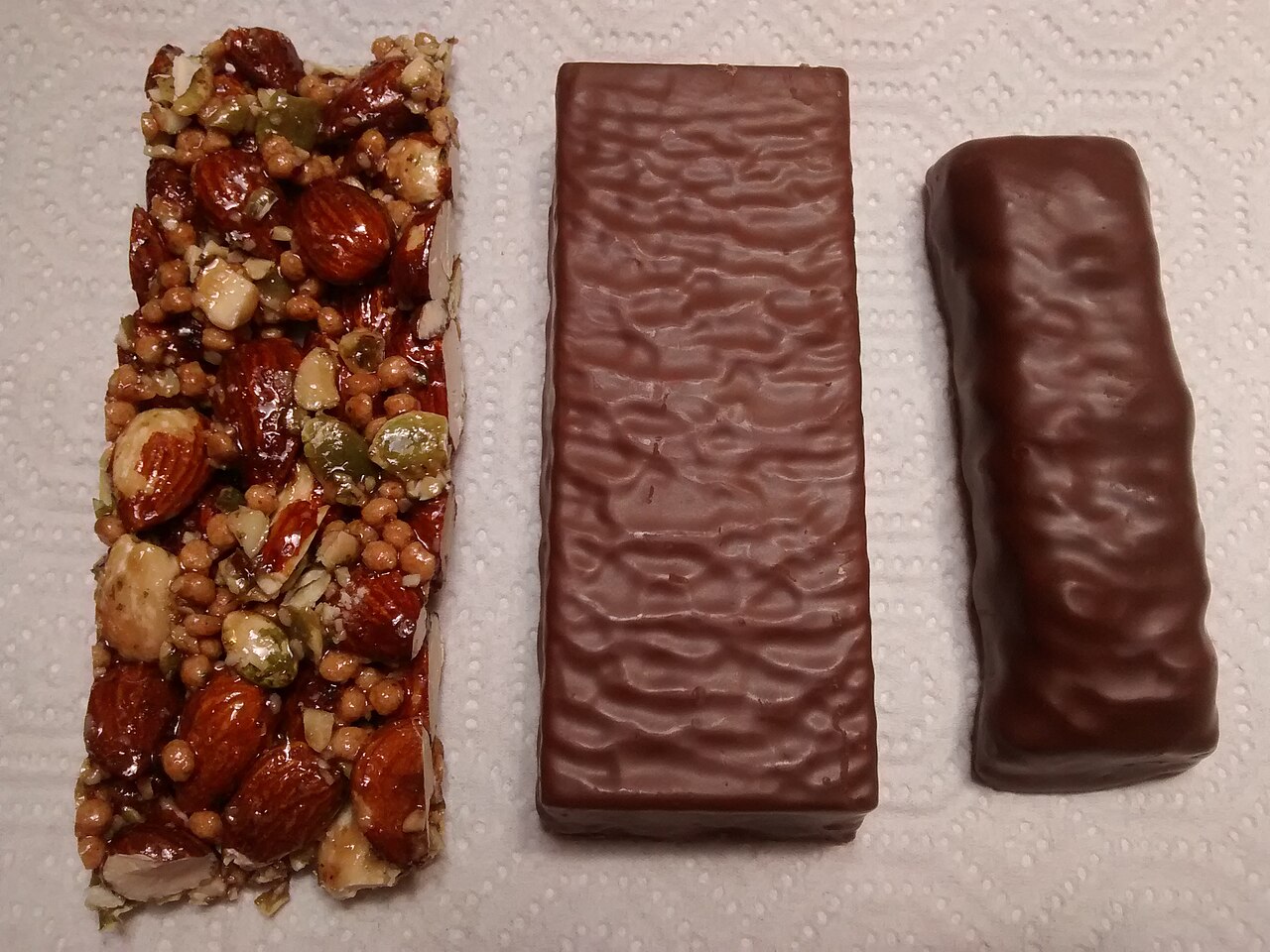
A protein bar can be a convenient snack.
It can also be a candy-bar-sized product with enough protein added to dominate the front of the wrapper.
Neither description tells you whether it fits what you want from it.
For that, the Nutrition Facts panel is much more useful.
1. Protein per serving
Start with the obvious number.
How many grams of protein does the actual labeled serving provide?
Not per 100 grams.
Not per box.
Not “up to.”
Per serving.
Two bars of similar physical size can deliver very different amounts.
2. Serving size
This number is easier to overlook.
Serving size defines the basis for the calories and nutrients on the panel.
If the package contains two servings but you naturally eat the entire product, every listed value needs to be interpreted accordingly.
For individually wrapped bars, the serving may often be the whole bar — but verify rather than assume.
3. Calories
Protein does not exist in isolation.
A 20 g protein bar providing 190 calories is a different food from a 20 g protein bar providing 350 calories.
Neither is automatically better.
The distinction matters depending on whether the bar is intended as a small protein snack, a meal replacement or convenient energy during a busy day.
A useful metric is:
protein grams per 100 calories
It is not a complete measure of nutrition quality, but it makes protein density easier to compare.
4. Added sugar
FDA separates added sugars from total sugars on the Nutrition Facts label.
That is useful because sugars naturally present in ingredients such as milk or fruit and sugars introduced during manufacturing are not the same labeling category.
A bar can have plenty of protein and still contribute a substantial amount of added sugar.
The front of the pack usually will not volunteer that comparison.
5. Dietary fiber
Protein and fiber solve different nutritional problems.
Some bars combine meaningful amounts of both.
Others have high protein but very little fiber.
Again, that does not automatically determine whether a product is good or bad.
It simply prevents the word “protein” from doing all the nutritional work in your evaluation.
6. Saturated fat and sodium
These two numbers are easy to ignore when shopping specifically for protein.
FDA’s % Daily Value system gives useful context.
As a general labeling guide, 5% DV or less is considered low and 20% DV or more is considered high for a nutrient.
That rule is not a complete dietary prescription, but it gives shoppers a quick way to compare similar products.
7. Price per useful amount
Price per bar is straightforward.
It can also mislead when bars provide very different protein quantities.
Suppose:
Bar A costs $2.00 and provides 12 g protein.
Bar B costs $2.40 and provides 20 g.
The cheaper bar costs less per unit.
The more expensive bar costs less per gram of protein.
Both price statements are true.
The useful metric depends on what you are buying the product for.
What does “high protein” mean?
Nutrient-content claims such as “high,” “rich in” and “excellent source” are regulated claims rather than purely creative advertising language.
FDA generally ties “high” claims to providing at least 20% of the Daily Value for the nutrient per reference amount customarily consumed.
There are additional details in protein labeling rules, so it is still worth reading the panel rather than treating the front claim as the complete analysis.
Ingredients still matter
After the numbers, read the ingredient list.
Two bars with nearly identical Nutrition Facts panels might use very different:
- protein sources;
- sweeteners;
- fats;
- fibers;
- coatings;
- flavor systems.
A person choosing around allergies, dietary preferences or gastrointestinal tolerance may care about those differences more than a two-gram protein gap.
The better comparison
A useful bar comparison records:
protein
serving size
calories
added sugar
fiber
saturated fat
sodium
price
Then the “high protein” claim can sit in its proper context.
Protein matters.
It just does not erase the rest of the label.
Sources
References used in this article
-
How to Understand and Use the Nutrition Facts Label
U.S. Food and Drug Administration
-
Daily Value on the Nutrition and Supplement Facts Labels
U.S. Food and Drug Administration
-
Dietary Supplement Labeling Guide: Claims
U.S. Food and Drug Administration
Hero image: Mx. Granger · CC0 1.0