Protein recommendations become confusing when several perfectly real numbers are presented as though they answer the same question.
One source might cite 0.8 grams per kilogram of body weight. A fitness article might suggest twice that amount. A protein-powder label might simply tell you how many grams are in a scoop.
Those numbers describe different things.
Start with total daily intake
The general adult Recommended Dietary Allowance for protein is 0.8 g per kilogram of body weight per day.
That is a population reference value, not a universal optimization target for every training situation.
People who exercise regularly — particularly those doing substantial resistance or endurance training — can have higher protein needs.
The NIH Office of Dietary Supplements summarizes sports-nutrition guidance placing many athletes around 1.2–2.0 g/kg/day.
The important word is total.
Protein from eggs, dairy, meat, fish, beans, soy, grains and other foods contributes alongside protein from shakes or bars.
A 25-gram protein shake does not create a separate protein requirement.
Convert grams per kilogram before comparing numbers
For somebody weighing 70 kg:
- 0.8 g/kg equals 56 g per day;
- 1.2 g/kg equals 84 g;
- 1.6 g/kg equals 112 g;
- 2.0 g/kg equals 140 g.
That makes the difference between a reference intake and an athletic intake easier to see.
It also shows why a fixed recommendation such as “eat 150 grams of protein” cannot sensibly apply to everybody.
Body size matters.
Training changes the context
Resistance training creates a stimulus for muscular adaptation.
Protein provides the amino acids needed to support protein turnover, repair and remodeling.
That does not mean protein powder itself creates the adaptation.
The training stimulus, total energy intake, total protein intake, recovery and the overall diet all matter.
Protein supplementation is most useful when it provides a convenient way to meet an otherwise difficult intake target.
More is not automatically better
Protein has an unusual marketing advantage: once consumers accept that protein is useful, a product containing more can easily appear superior.
Biology is not that simple.
Moving from an inadequate intake to an adequate one can matter considerably.
Moving indefinitely higher does not guarantee a proportional improvement in muscle mass, strength or performance.
That is why Bextera separates protein quantity from protein adequacy.
They are related but not identical questions.
One meal is not the entire calculation
Daily intake remains the foundation, but distribution can also be relevant.
Sports-nutrition guidance commonly recommends consuming useful amounts of high-quality protein across the day rather than placing nearly all protein into one meal.
NIH summarizes guidance that includes approximately 0.3 g/kg of high-quality protein around training, followed by additional protein-containing meals or feedings later in the day.
Again, that is sports-nutrition context rather than an individualized prescription.
Food and supplements solve the same intake problem differently
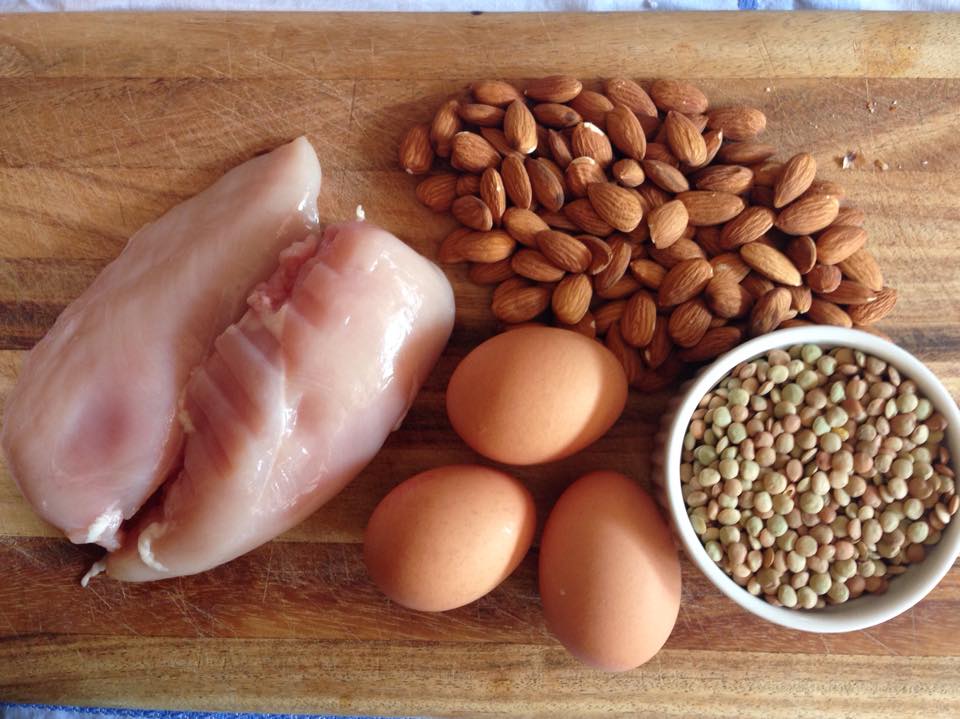
A whey shake, Greek yogurt, eggs and a serving of beans can all contribute protein.
They differ in amino-acid composition, calories, micronutrients, convenience, price and other characteristics.
Protein powders are particularly easy to quantify and consume, which makes them useful when convenience matters.
Food often supplies considerably more than isolated protein.
Neither observation makes one category universally superior.
The more useful question
Instead of asking:
How much protein should everyone eat?
ask:
How much protein does this person already consume, what kind of training are they doing, and what intake range is relevant to that context?
That framing makes supplement decisions much less mysterious.
A protein powder becomes one possible tool for meeting an intake target rather than the definition of a high-protein diet.
Sources
References used in this article
-
Dietary Supplements for Exercise and Athletic Performance — Protein
NIH Office of Dietary Supplements
Hero image: Smastronardo · CC BY-SA 4.0