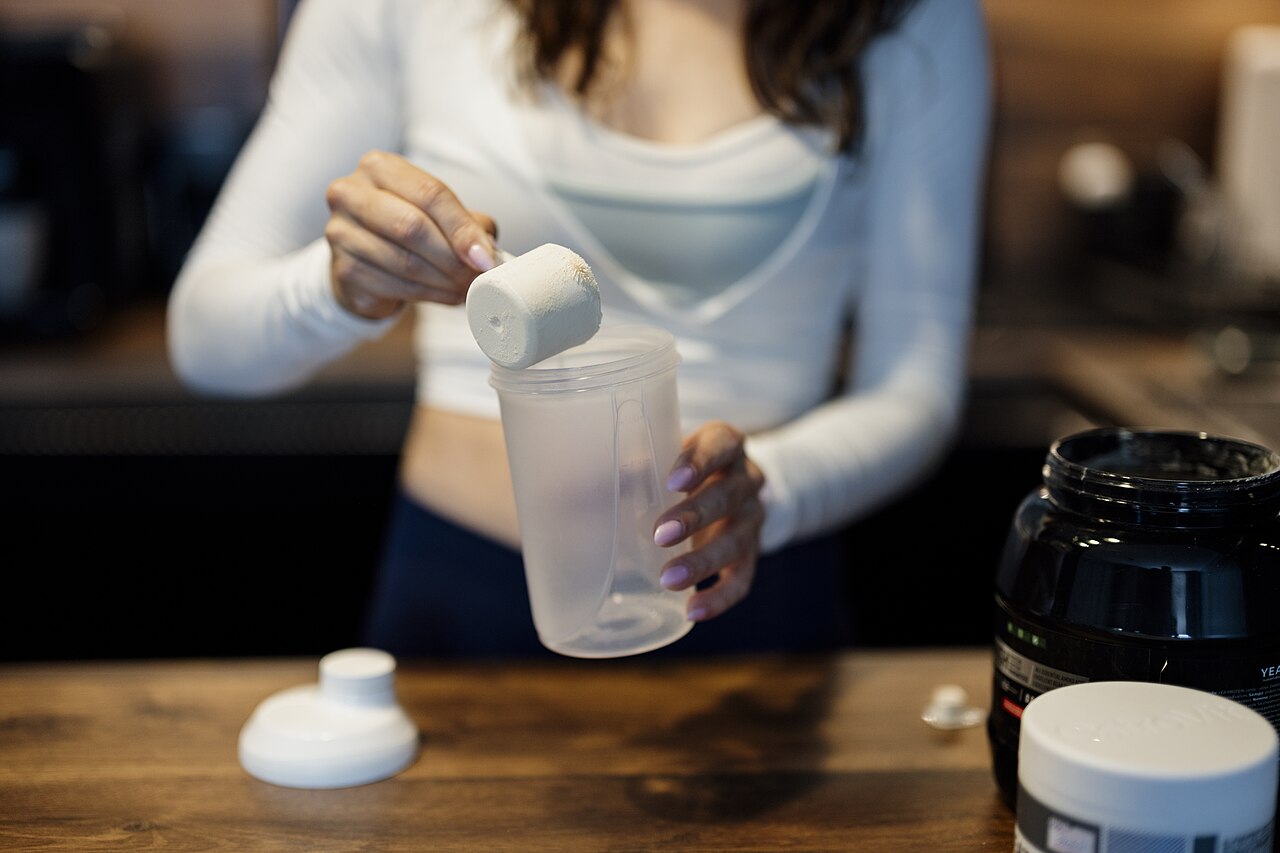
Few sports-nutrition ideas are easier to market than a countdown clock.
Finish training. Drink protein immediately. Miss the window and lose the opportunity.
The research is more nuanced.
Protein timing can matter, but it sits inside a larger system that includes total protein intake, training quality, energy intake and how protein is distributed across the day.
Why the post-workout idea exists
Resistance exercise changes muscle-protein turnover.
Supplying essential amino acids around training can support muscle-protein synthesis, which is why sports-nutrition guidance commonly includes protein after exercise.
The NIH Office of Dietary Supplements summarizes sports-nutrition recommendations that include high-quality protein around training and additional protein-containing meals throughout the day.
That provides useful context.
It does not mean muscle suddenly stops responding to dietary protein once a narrow clock expires.
Total daily intake remains fundamental
Imagine two people doing the same resistance-training program.
One drinks a shake immediately after every workout but consistently eats too little protein during the rest of the day.
The other eats a normal protein-containing meal somewhat later and consistently reaches an appropriate daily protein intake.
The first strategy is not automatically superior simply because the shake arrived faster.
Timing cannot fully compensate for inadequate total intake.
What larger analyses show
A network meta-analysis covering 116 eligible resistance-training trials and more than 4,700 participants examined different protein sources and timing strategies.
Different approaches produced favorable results for different outcomes.
Post-exercise supplementation performed well for muscle-mass outcomes, while other timing strategies also showed benefits for selected strength measures.
Milk proteins, including whey and casein, were among the protein sources associated with improvements during resistance training.
The useful conclusion is not that timing is irrelevant.
It is that no single narrow timing rule explains every training outcome.
Muscle mass and strength are different outcomes
Nutrition articles often combine several measurements under the phrase “muscle growth.”
Researchers may actually measure:
- lean body mass;
- muscle thickness;
- strength;
- physical performance;
- muscle-protein synthesis.
These are related measures, but they are not interchangeable.
A strategy that appears favorable for one outcome should not automatically be described as optimal for every other outcome.
Distribution may be more practical than a stopwatch
Rather than focusing on one exact minute after training, it can be more useful to think about protein distribution throughout the day.
Several protein-containing meals or feedings can help someone reach an appropriate daily total while repeatedly providing essential amino acids.
For many recreational lifters, this is easier to apply than treating each workout like a race against the clock.
Where protein powder fits
Protein powder is convenient after exercise because it is easy to carry, prepare and quantify.
Convenience is not the same thing as necessity.
A normal meal containing sufficient high-quality protein can also contribute to the day’s protein intake.
The choice can therefore depend on schedule, appetite, dietary preference and cost.
The useful hierarchy
For someone interested in resistance training, the bigger priorities are:
- train consistently;
- consume sufficient overall energy;
- obtain adequate total daily protein;
- distribute protein sensibly through the day;
- optimize timing when it fits the routine.
Protein timing belongs in the conversation.
It simply should not distract from the variables that matter across the entire day.
Sources
References used in this article
-
Dietary Supplements for Exercise and Athletic Performance — Protein
NIH Office of Dietary Supplements
-
Effects of Timing and Types of Protein Supplementation on Improving Muscle Mass, Strength, and Physical Performance
International Journal of Sport Nutrition and Exercise Metabolism · PMID 38039960
Hero image: Nenad Stojković · CC BY 2.0